
Uniontown 
Connellsville 
(724) 320-2447

Blog

Breaking in the Queen’s New Shoes

When Queen Elizabeth II breaks in a new pair of shoes, she doesn’t; she has a member of her staff break in her footwear for her. For many people, breaking in a new pair of shoes often results in uncomfortable pain and the formation of tender blisters on the feet. To avoid this issue altogether, the Queen instead gives her shoes to a junior member of Buckingham Palace staff who wears the same size. These shoes are then reportedly broken in by the staff member, who fulfills this task by walking up and down the palace corridors until the shoes have softened and become more comfortable. Long-time dressmaker for the queen, Stewart Parvin, revealed this information. While you may not be able to have someone break in your shoes for you, blisters can be avoided by gradually breaking in new shoes over a period of time.

Blisters are prone to making everyday activities extremely uncomfortable. If your feet are hurting, contact Dr. Arnold Tarpley, Jr. of Tarpley Foot and Ankle Center. Dr. Tarpley can provide the care you need to keep you pain-free and on your feet.

Foot Blisters

Foot blisters develop as a result of constantly wearing tight or ill-fitting footwear. This happens due to the constant rubbing from the shoe, which can often lead to pain.

What Are Foot Blisters?

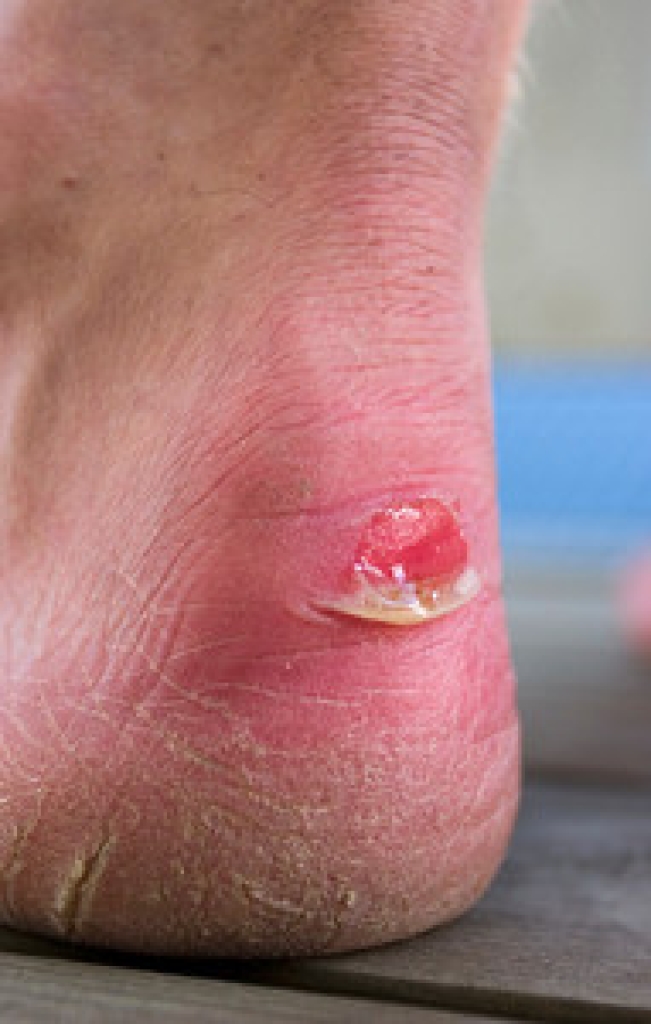
A foot blister is a small fluid-filled pocket that forms on the upper-most layer of the skin. Blisters are filled with clear fluid and can lead to blood drainage or pus if the area becomes infected.

How Do Blisters Form?

Blisters on the feet are often the result of constant friction of skin and material, usually by shoe rubbing. Walking in sandals, boots, or shoes that don’t fit properly for long periods of time can result in a blister. Having consistent foot moisture and humidity can easily lead to blister formation.

Prevention & Treatment

It is important to properly care for the affected area in order to prevent infection and ease the pain. Do not lance the blister and use a Band-Aid to provide pain relief. Also, be sure to keep your feet dry and wear proper fitting shoes. If you see blood or pus in a blister, seek assistance from a podiatrist.

If you have any questions, please feel free to contact one of our offices located in Uniontown, and Connellsville, PA . We offer the newest diagnostic and treatment technologies for all your foot care needs.
Read more about Blisters on the Feet

Anxiety and Depression May Contribute to Hyperhidrosis

Hyperhidrosis is identified as a medical condition which leads to overactive sweat glands, also associated with higher rates of anxiety and even depression in those who are affected. According to a study by the American Academy of Dermatology (AAD), “21 percent of people with hyperhidrosis had anxiety, and 27 percent of people with this ailment had depression.” Hyperhidrosis can occur regardless of factors such as temperature, and can occur in any region of our body. However, in most cases it typically affects the feet, hands, and underarms. Nearly 3 percent of the population is afflicted by this condition.

If you are suffering from hyperhidrosis contact Dr. Arnold Tarpley, Jr. of Tarpley Foot and Ankle Center. Dr. Tarpley can provide the care you need to attend to all of your foot and ankle needs.

Hyperhidrosis of the Feet

Hyperhidrosis is a rare disorder that can cause people to have excessive sweating of their feet. This can usually occur all on its own without rigorous activity involved. People who suffer from hyperhidrosis may also experience sweaty palms.

Although it is said that sweating is a healthy process meant to cool down the body temperature and to maintain a proper internal temperature, hyperhidrosis may prove to be a huge hindrance on a person’s everyday life.

Plantar hyperhidrosis is considered to be the main form of hyperhidrosis. Secondary hyperhidrosis can refer to sweating that occurs in areas other than the feet or hands and armpits. Often this may be a sign of it being related to another medical condition such as menopause, hyperthyroidism and even Parkinson’s disease.

In order to alleviate this condition, it is important to see your doctor so that they may prescribe the necessary medications so that you can begin to live a normal life again. If this is left untreated, it is said that it will persist throughout an individual’s life.

A last resort approach would be surgery, but it is best to speak with your doctor to find out what may be the best treatment for you.

If you have any questions, please feel free to contact one of our offices located in Uniontown, and Connellsville, PA . We offer the newest diagnostic and treatment technologies for all your foot care needs.
Read more about Hyperhidrosis of the Feet

Managing Athlete's Foot

Anyone that has ever had Athlete’s foot knows how much of a nuisance it is.  It itches and itches, and no amount of scratching will make it relent.  The foot gets red, and pain can quickly ensue.  Athlete’s foot is a fungus, and like most fungi, thrives in warm, moist environments.  The gym is a perfect place for this fungus, so it is important to remember to wear sandals when showering after your workout.  Keep your feet dry, make sure to clean them well, and change your socks daily.  If your feet are prone to sweating you may have an increased risk of Athlete’s foot, so double your efforts in this regard.  If you do contract the disease, over the counter treatment options are available, and are quite effective.

Athlete’s foot is an inconvenient condition that can be easily reduced with the proper treatment. If you have any concerns about your feet and ankles, contact Dr. Arnold Tarpley, Jr. from Tarpley Foot and Ankle Center.  Dr. Tarpley will treat your foot and ankle needs.

Athlete’s Foot: The Sole Story

Athlete's foot, also known as tinea pedis, can be an extremely contagious foot infection. It is commonly contracted in public changing areas and bathrooms, dormitory style living quarters, around locker rooms and public swimming pools, or anywhere your feet often come into contact with other people.

Solutions to Combat Athlete’s Foot

  • Hydrate your feet by using lotion
  • Exfoliate
  • Buff off nails
  • Use of anti-fungal products
  • Examine your feet and visit your doctor if any suspicious blisters or cuts develop

Athlete’s foot can cause many irritating symptoms such as dry and flaking skin, itching, and redness. Some more severe symptoms can include bleeding and cracked skin, intense itching and burning, and even pain when walking. In the worst cases, Athlete’s foot can cause blistering as well. Speak to your podiatrist for a better understanding of the different causes of Athlete’s foot, as well as help in determining which treatment options are best for you.

If you have any questions please feel free to contact one of our offices located in Uniontown, and Connellsville, PA . We offer the newest diagnostic and treatment technologies for all your foot and ankle needs.

Read more about Athlete's Foot

Perils of Ingrown Toenails

If you have ever experienced an ingrown toenail, you know how painful and how much of a hindrance it can be.  It occurs when part of the toenail grows into the tissue of the toe.  This can turn into a serious condition, as swelling and infection may result.  Medically known as onychocryptosis, this disorder is typically caused by over clipping of toenails or wearing shoes that do not fit properly.  With nearly 3 million cases of patients with ingrown toenails, it is important to contact your podiatrist to learn about proper treatment.

Ingrown toenails can become painful if they are not treated properly. For more information about ingrown toenails, contact Dr. Arnold Tarpley, Jr. of Tarpley Foot and Ankle Center. Dr. Tarpley can provide the care you need to keep you pain-free and on your feet.

Ingrown Toenails

Ingrown toenails occur when a toenail grows sideways into the bed of the nail, causing pain, swelling, and possibly infection.

Causes

  • Bacterial infections
  • Improper nail cutting such as cutting it too short or not straight across
  • Trauma to the toe, such as stubbing, which causes the nail to grow back irregularly
  • Ill-fitting shoes that bunch the toes too close together
  • Genetic predisposition

Prevention

Because ingrown toenails are not something found outside of shoe-wearing cultures, going barefoot as often as possible will decrease the likeliness of developing ingrown toenails. Wearing proper fitting shoes and using proper cutting techniques will also help decrease your risk of developing ingrown toenails.

Treatment

Ingrown toenails are a very treatable foot condition. In minor cases, soaking the affected area in salt or antibacterial soaps will not only help with the ingrown nail itself, but also help prevent any infections from occurring. In more severe cases, surgery is an option. In either case, speaking to your podiatrist about this condition will help you get a better understanding of specific treatment options that are right for you.

If you have any questions, please feel free to contact one of our offices located in Uniontown, and Connellsville, PA . We offer the newest diagnostic and treatment technologies for all your foot care needs.

Read more about Ingrown Toenail Care
Connect with us