


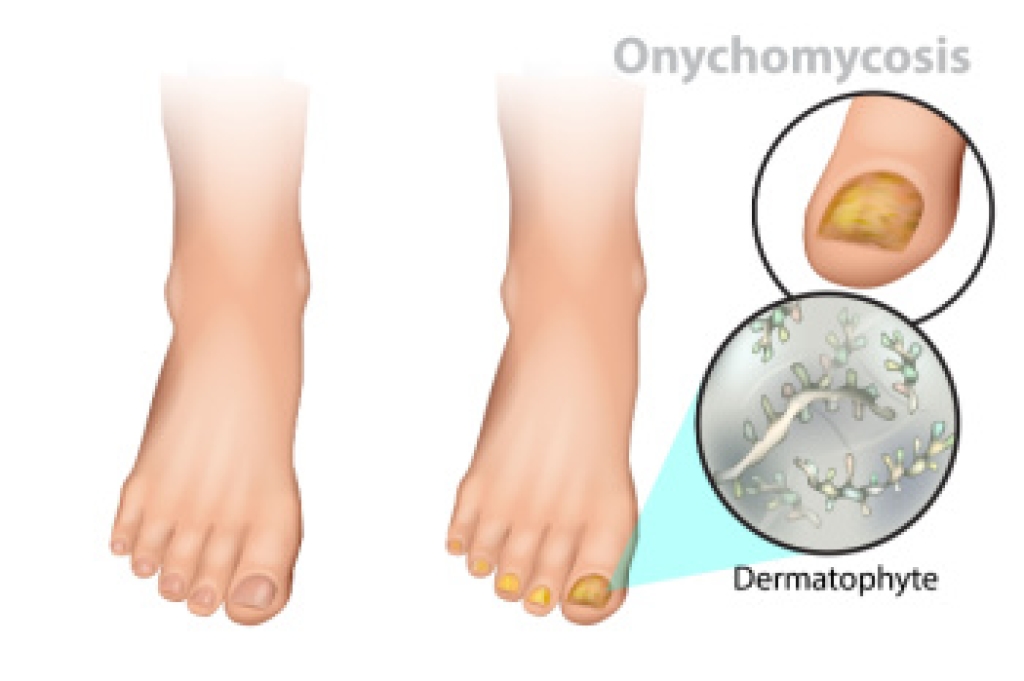
Toenail fungus, also known as mycosis nail fungus or onychomycosis, is a fungal infection that develops in or beneath a toenail. It can begin gradually, making early changes easy to miss. Common symptoms include yellow, white, or brown discoloration, along with nails that become thick, brittle, or separated from the nail bed. Although toenail fungus is usually not dangerous, prompt care can help prevent the infection from becoming more difficult to treat.
There are several types of toenail fungus. Distal subungual infection is the most common and typically begins beneath the nail tip before spreading deeper. White superficial infection affects the nail surface and may cause chalky white patches. Additionally, proximal subungual infection begins near the nail base and gradually moves outward. These infections can develop after exposure to fungi in warm, damp environments. Walking barefoot in shared showers, using contaminated nail-care tools, and wearing sweaty footwear can increase exposure. Risk factors include diabetes, poor circulation, and a weakened immune system.
A podiatrist will examine the affected nail and look for other conditions that may cause similar changes. When needed, a small nail sample can be tested to confirm a fungal infection. Treatment depends on the type and severity of the infection. A podiatrist may recommend prescription topical antifungal medication or oral antifungal medicine. The nail may also be carefully trimmed or thinned to improve medication contact. Keeping feet clean and dry, changing socks regularly, and choosing breathable footwear can support treatment and help reduce recurrence.
Toenail fungus can be unsightly and uncomfortable. If you notice changes in toenail color, thickness, or texture, it is suggested that you consult a podiatrist for effective treatment solutions.
If left untreated, toenail fungus may spread to other toenails, skin, or even fingernails. If you suspect you have toenail fungus it is important to seek treatment right away. For more information about treatment, contact Dr. Arnold Tarpley, Jr. of Tarpley Foot and Ankle Center. Dr. Tarpley can provide the care you need to keep you pain-free and on your feet.
Symptoms
- Warped or oddly shaped nails
- Yellowish nails
- Loose/separated nail
- Buildup of bits and pieces of nail fragments under the nail
- Brittle, broken, thickened nail
Treatment
If self-care strategies and over-the-counter medications does not help your fungus, your podiatrist may give you a prescription drug instead. Even if you find relief from your toenail fungus symptoms, you may experience a repeat infection in the future.
Prevention
In order to prevent getting toenail fungus in the future, you should always make sure to wash your feet with soap and water. After washing, it is important to dry your feet thoroughly especially in between the toes. When trimming your toenails, be sure to trim straight across instead of in a rounded shape. It is crucial not to cover up discolored nails with nail polish because that will prevent your nail from being able to “breathe”.
In some cases, surgical procedure may be needed to remove the toenail fungus. Consult with your podiatrist about the best treatment options for your case of toenail fungus.
If you have any questions please contact one of our offices located in Uniontown, and Connellsville, PA . We offer the newest diagnostic and treatment technologies for all your foot and ankle needs.


